

Literary Alley
Explore The Way — Lit By Courageous Free Thinkers, Poets, Prophets, Mystics & Mediums
Explore LITERARY ALLEY, an ever-growing compilation of prophets and their messages, curated to illuminate the seeker's path during their journey of metamorphosis and soul evolution. This collection is designed to help minds break free from materialistic or nihilistic views and discover the magic that unites us all in this dream of cause and effect. May courage be with you on your journey!



“In the middle of the journey of our life, I came to myself, in a dark wood, where the direct way was lost.”
— Dante Alighieri
Inferno
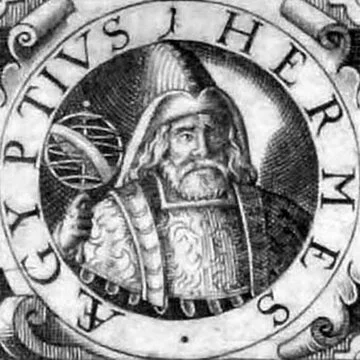
HERMES TRISMEGISTUS
A Curated Selection Of Enlightened Works

Hermes Trismegistus (Ancient Greek: Ἑρμῆς ὁ Τρισμέγιστος, "thrice-greatest Hermes"; Latin: Mercurius ter Maximus) is the purported author of the Hermetic Corpus, a series of sacred texts that are the basis of Hermeticism.
Hermes Trismegistus may be associated with the Greek god Hermes and the Egyptian god Thoth.[1] Greeks in the Ptolemaic Kingdom of Egypt recognized the equivalence of Hermes and Thoth through the interpretatio graeca.[2] Consequently, the two gods were worshiped as one, in what had been the Temple of Thoth in Khemenu, which was known in the Hellenistic period as Hermopolis.[3]
Hermes, the Greek god of interpretive communication, was combined with Thoth, the Egyptian god of wisdom. The Egyptian priest and polymath Imhotep had been deified long after his death and therefore assimilated to Thoth in the classical and Hellenistic periods.[4] The renowned scribe Amenhotep and a wise man named Teôs were coequal deities of wisdom, science, and medicine; and, thus, they were placed alongside Imhotep in shrines dedicated to Thoth–Hermes during the Ptolemaic Kingdom.[5]
A Mycenaean Greek reference to a deity or semi-deity called ti-ri-se-ro-e (Linear B: 𐀴𐀪𐀮𐀫𐀁; Tris Hḗrōs, "thrice or triple hero")[6] was found on two Linear B clay tablets at Pylos[7] and could be connected to the later epithet "thrice great", Trismegistos, applied to Hermes/Thoth. On the aforementioned PY Tn 316 tablet—as well as other Linear B tablets found in Pylos, Knossos, and Thebes—there appears the name of the deity "Hermes" as e-ma-ha (Linear B: 𐀁𐀔𐁀), but not in any apparent connection with the "Trisheros". This interpretation of poorly understood Mycenaean material is disputed, since Hermes Trismegistus is not referenced in any of the copious sources before he emerges in Hellenistic Egypt.



“And now it stands proven that Satan, or the Red Fiery Dragon, the ‘Lord of Phosphorus,’ and Lucifer, or ‘Light-Bearer,’ is in us: it is our Mind.”
— H. P. Blavatsky
The Secret Doctrine: The Synthesis of Science, Religion, and Philosophy
HERMES TRISMEGISTUS
A Curated Selection Of Enlightened Works

Hermes Trismegistus (Ancient Greek: Ἑρμῆς ὁ Τρισμέγιστος, "thrice-greatest Hermes"; Latin: Mercurius ter Maximus) is the purported author of the Hermetic Corpus, a series of sacred texts that are the basis of Hermeticism.
Hermes Trismegistus may be associated with the Greek god Hermes and the Egyptian god Thoth.[1] Greeks in the Ptolemaic Kingdom of Egypt recognized the equivalence of Hermes and Thoth through the interpretatio graeca.[2] Consequently, the two gods were worshiped as one, in what had been the Temple of Thoth in Khemenu, which was known in the Hellenistic period as Hermopolis.[3]
Hermes, the Greek god of interpretive communication, was combined with Thoth, the Egyptian god of wisdom. The Egyptian priest and polymath Imhotep had been deified long after his death and therefore assimilated to Thoth in the classical and Hellenistic periods.[4] The renowned scribe Amenhotep and a wise man named Teôs were coequal deities of wisdom, science, and medicine; and, thus, they were placed alongside Imhotep in shrines dedicated to Thoth–Hermes during the Ptolemaic Kingdom.[5]
A Mycenaean Greek reference to a deity or semi-deity called ti-ri-se-ro-e (Linear B: 𐀴𐀪𐀮𐀫𐀁; Tris Hḗrōs, "thrice or triple hero")[6] was found on two Linear B clay tablets at Pylos[7] and could be connected to the later epithet "thrice great", Trismegistos, applied to Hermes/Thoth. On the aforementioned PY Tn 316 tablet—as well as other Linear B tablets found in Pylos, Knossos, and Thebes—there appears the name of the deity "Hermes" as e-ma-ha (Linear B: 𐀁𐀔𐁀), but not in any apparent connection with the "Trisheros". This interpretation of poorly understood Mycenaean material is disputed, since Hermes Trismegistus is not referenced in any of the copious sources before he emerges in Hellenistic Egypt.



“Questing... is not an ego trip; it is an adventure to bring into fulfillment your gift to the world, which is yourself.”
— Joseph Campbell
Pathways to Bliss: Mythology and Personal Transformation
HERMES TRISMEGISTUS
A Curated Selection Of Enlightened Works

Hermes Trismegistus (Ancient Greek: Ἑρμῆς ὁ Τρισμέγιστος, "thrice-greatest Hermes"; Latin: Mercurius ter Maximus) is the purported author of the Hermetic Corpus, a series of sacred texts that are the basis of Hermeticism.
Hermes Trismegistus may be associated with the Greek god Hermes and the Egyptian god Thoth.[1] Greeks in the Ptolemaic Kingdom of Egypt recognized the equivalence of Hermes and Thoth through the interpretatio graeca.[2] Consequently, the two gods were worshiped as one, in what had been the Temple of Thoth in Khemenu, which was known in the Hellenistic period as Hermopolis.[3]
Hermes, the Greek god of interpretive communication, was combined with Thoth, the Egyptian god of wisdom. The Egyptian priest and polymath Imhotep had been deified long after his death and therefore assimilated to Thoth in the classical and Hellenistic periods.[4] The renowned scribe Amenhotep and a wise man named Teôs were coequal deities of wisdom, science, and medicine; and, thus, they were placed alongside Imhotep in shrines dedicated to Thoth–Hermes during the Ptolemaic Kingdom.[5]
A Mycenaean Greek reference to a deity or semi-deity called ti-ri-se-ro-e (Linear B: 𐀴𐀪𐀮𐀫𐀁; Tris Hḗrōs, "thrice or triple hero")[6] was found on two Linear B clay tablets at Pylos[7] and could be connected to the later epithet "thrice great", Trismegistos, applied to Hermes/Thoth. On the aforementioned PY Tn 316 tablet—as well as other Linear B tablets found in Pylos, Knossos, and Thebes—there appears the name of the deity "Hermes" as e-ma-ha (Linear B: 𐀁𐀔𐁀), but not in any apparent connection with the "Trisheros". This interpretation of poorly understood Mycenaean material is disputed, since Hermes Trismegistus is not referenced in any of the copious sources before he emerges in Hellenistic Egypt.




“Trees are the largest and most spiritually advanced plants on Earth. They are constantly in meditation. Subtle energy is their natural language.”
— Mantak Chia
MANTAK CHIA
1944

Hermes Trismegistus (Ancient Greek: Ἑρμῆς ὁ Τρισμέγιστος, "thrice-greatest Hermes"; Latin: Mercurius ter Maximus) is the purported author of the Hermetic Corpus, a series of sacred texts that are the basis of Hermeticism.
Hermes Trismegistus may be associated with the Greek god Hermes and the Egyptian god Thoth.[1] Greeks in the Ptolemaic Kingdom of Egypt recognized the equivalence of Hermes and Thoth through the interpretatio graeca.[2] Consequently, the two gods were worshiped as one, in what had been the Temple of Thoth in Khemenu, which was known in the Hellenistic period as Hermopolis.[3]
Hermes, the Greek god of interpretive communication, was combined with Thoth, the Egyptian god of wisdom. The Egyptian priest and polymath Imhotep had been deified long after his death and therefore assimilated to Thoth in the classical and Hellenistic periods.[4] The renowned scribe Amenhotep and a wise man named Teôs were coequal deities of wisdom, science, and medicine; and, thus, they were placed alongside Imhotep in shrines dedicated to Thoth–Hermes during the Ptolemaic Kingdom.[5]
A Mycenaean Greek reference to a deity or semi-deity called ti-ri-se-ro-e (Linear B: 𐀴𐀪𐀮𐀫𐀁; Tris Hḗrōs, "thrice or triple hero")[6] was found on two Linear B clay tablets at Pylos[7] and could be connected to the later epithet "thrice great", Trismegistos, applied to Hermes/Thoth. On the aforementioned PY Tn 316 tablet—as well as other Linear B tablets found in Pylos, Knossos, and Thebes—there appears the name of the deity "Hermes" as e-ma-ha (Linear B: 𐀁𐀔𐁀), but not in any apparent connection with the "Trisheros". This interpretation of poorly understood Mycenaean material is disputed, since Hermes Trismegistus is not referenced in any of the copious sources before he emerges in Hellenistic Egypt.



“When we love, we always strive to become better than we are. When we strive to become better than we are, everything around us becomes better too.”
– Paulo Coelho
The Alchemist
PAULO COELHO
1947

Hermes Trismegistus (Ancient Greek: Ἑρμῆς ὁ Τρισμέγιστος, "thrice-greatest Hermes"; Latin: Mercurius ter Maximus) is the purported author of the Hermetic Corpus, a series of sacred texts that are the basis of Hermeticism.
Hermes Trismegistus may be associated with the Greek god Hermes and the Egyptian god Thoth.[1] Greeks in the Ptolemaic Kingdom of Egypt recognized the equivalence of Hermes and Thoth through the interpretatio graeca.[2] Consequently, the two gods were worshiped as one, in what had been the Temple of Thoth in Khemenu, which was known in the Hellenistic period as Hermopolis.[3]
Hermes, the Greek god of interpretive communication, was combined with Thoth, the Egyptian god of wisdom. The Egyptian priest and polymath Imhotep had been deified long after his death and therefore assimilated to Thoth in the classical and Hellenistic periods.[4] The renowned scribe Amenhotep and a wise man named Teôs were coequal deities of wisdom, science, and medicine; and, thus, they were placed alongside Imhotep in shrines dedicated to Thoth–Hermes during the Ptolemaic Kingdom.[5]
A Mycenaean Greek reference to a deity or semi-deity called ti-ri-se-ro-e (Linear B: 𐀴𐀪𐀮𐀫𐀁; Tris Hḗrōs, "thrice or triple hero")[6] was found on two Linear B clay tablets at Pylos[7] and could be connected to the later epithet "thrice great", Trismegistos, applied to Hermes/Thoth. On the aforementioned PY Tn 316 tablet—as well as other Linear B tablets found in Pylos, Knossos, and Thebes—there appears the name of the deity "Hermes" as e-ma-ha (Linear B: 𐀁𐀔𐁀), but not in any apparent connection with the "Trisheros". This interpretation of poorly understood Mycenaean material is disputed, since Hermes Trismegistus is not referenced in any of the copious sources before he emerges in Hellenistic Egypt.






“To the extent that you eliminate ego from your activities, God comes into them - but no more and no less. Begin with that, and let it cost you your uttermost. In this way, and no other, is true peace to be found.”
— Meister Eckhart
HERMES TRISMEGISTUS
A Curated Selection Of Enlightened Works

Hermes Trismegistus (Ancient Greek: Ἑρμῆς ὁ Τρισμέγιστος, "thrice-greatest Hermes"; Latin: Mercurius ter Maximus) is the purported author of the Hermetic Corpus, a series of sacred texts that are the basis of Hermeticism.
Hermes Trismegistus may be associated with the Greek god Hermes and the Egyptian god Thoth.[1] Greeks in the Ptolemaic Kingdom of Egypt recognized the equivalence of Hermes and Thoth through the interpretatio graeca.[2] Consequently, the two gods were worshiped as one, in what had been the Temple of Thoth in Khemenu, which was known in the Hellenistic period as Hermopolis.[3]
Hermes, the Greek god of interpretive communication, was combined with Thoth, the Egyptian god of wisdom. The Egyptian priest and polymath Imhotep had been deified long after his death and therefore assimilated to Thoth in the classical and Hellenistic periods.[4] The renowned scribe Amenhotep and a wise man named Teôs were coequal deities of wisdom, science, and medicine; and, thus, they were placed alongside Imhotep in shrines dedicated to Thoth–Hermes during the Ptolemaic Kingdom.[5]
A Mycenaean Greek reference to a deity or semi-deity called ti-ri-se-ro-e (Linear B: 𐀴𐀪𐀮𐀫𐀁; Tris Hḗrōs, "thrice or triple hero")[6] was found on two Linear B clay tablets at Pylos[7] and could be connected to the later epithet "thrice great", Trismegistos, applied to Hermes/Thoth. On the aforementioned PY Tn 316 tablet—as well as other Linear B tablets found in Pylos, Knossos, and Thebes—there appears the name of the deity "Hermes" as e-ma-ha (Linear B: 𐀁𐀔𐁀), but not in any apparent connection with the "Trisheros". This interpretation of poorly understood Mycenaean material is disputed, since Hermes Trismegistus is not referenced in any of the copious sources before he emerges in Hellenistic Egypt.



“They wander in darkness seeking light, failing to realize that the light is in the heart of the darkness”
― Manly P. Hall
The Lost Keys of Freemasonry: Or the Secret of Hiram Abiff
MANLY P. HALL
1904 - 1990

Hermes Trismegistus (Ancient Greek: Ἑρμῆς ὁ Τρισμέγιστος, "thrice-greatest Hermes"; Latin: Mercurius ter Maximus) is the purported author of the Hermetic Corpus, a series of sacred texts that are the basis of Hermeticism.
Hermes Trismegistus may be associated with the Greek god Hermes and the Egyptian god Thoth.[1] Greeks in the Ptolemaic Kingdom of Egypt recognized the equivalence of Hermes and Thoth through the interpretatio graeca.[2] Consequently, the two gods were worshiped as one, in what had been the Temple of Thoth in Khemenu, which was known in the Hellenistic period as Hermopolis.[3]
Hermes, the Greek god of interpretive communication, was combined with Thoth, the Egyptian god of wisdom. The Egyptian priest and polymath Imhotep had been deified long after his death and therefore assimilated to Thoth in the classical and Hellenistic periods.[4] The renowned scribe Amenhotep and a wise man named Teôs were coequal deities of wisdom, science, and medicine; and, thus, they were placed alongside Imhotep in shrines dedicated to Thoth–Hermes during the Ptolemaic Kingdom.[5]
A Mycenaean Greek reference to a deity or semi-deity called ti-ri-se-ro-e (Linear B: 𐀴𐀪𐀮𐀫𐀁; Tris Hḗrōs, "thrice or triple hero")[6] was found on two Linear B clay tablets at Pylos[7] and could be connected to the later epithet "thrice great", Trismegistos, applied to Hermes/Thoth. On the aforementioned PY Tn 316 tablet—as well as other Linear B tablets found in Pylos, Knossos, and Thebes—there appears the name of the deity "Hermes" as e-ma-ha (Linear B: 𐀁𐀔𐁀), but not in any apparent connection with the "Trisheros". This interpretation of poorly understood Mycenaean material is disputed, since Hermes Trismegistus is not referenced in any of the copious sources before he emerges in Hellenistic Egypt.


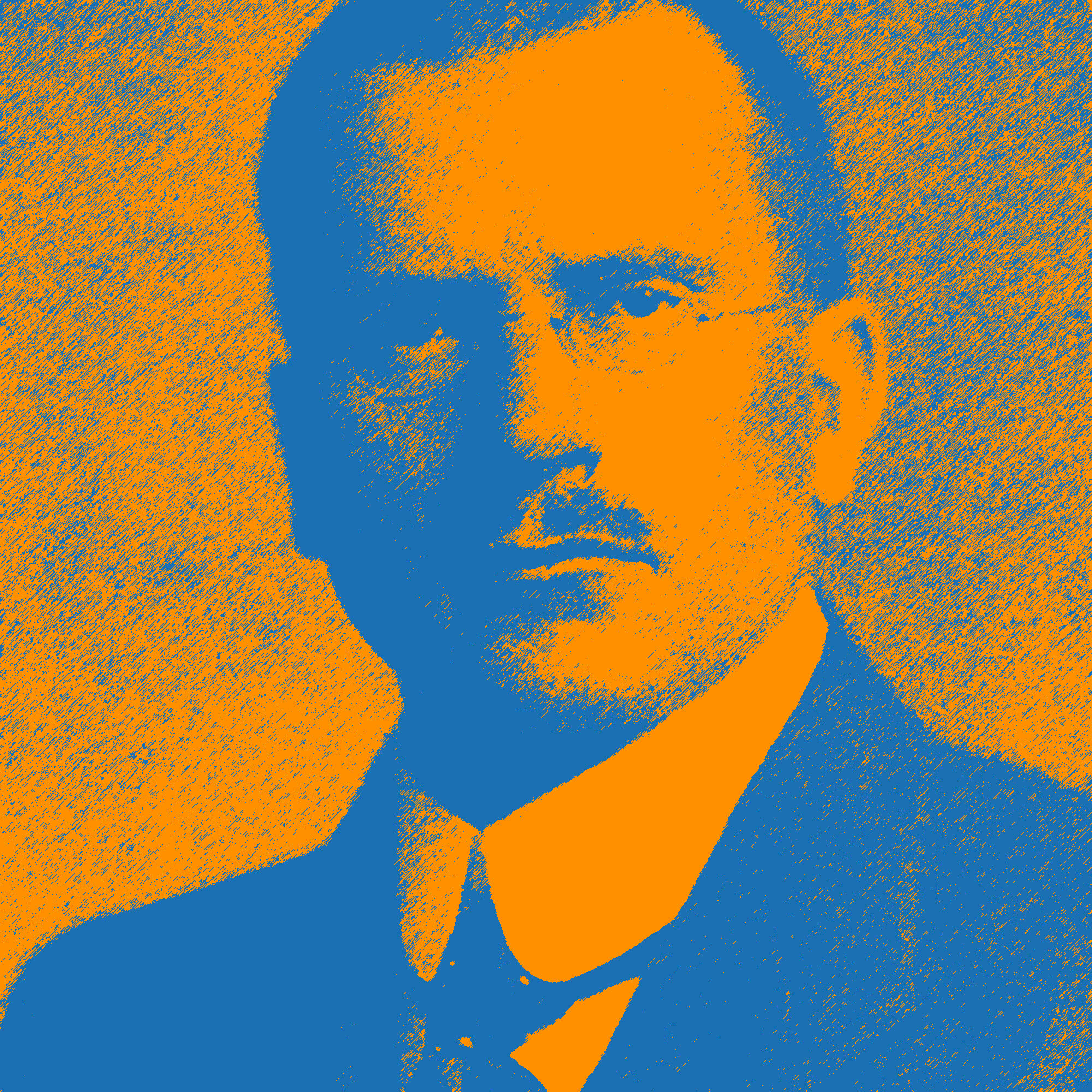
“The world will ask you who you are, and if you don't know, the world will tell you.”
— Carl G. Jung
CARL G. JUNG
1875 - 1961

Hermes Trismegistus (Ancient Greek: Ἑρμῆς ὁ Τρισμέγιστος, "thrice-greatest Hermes"; Latin: Mercurius ter Maximus) is the purported author of the Hermetic Corpus, a series of sacred texts that are the basis of Hermeticism.
Hermes Trismegistus may be associated with the Greek god Hermes and the Egyptian god Thoth.[1] Greeks in the Ptolemaic Kingdom of Egypt recognized the equivalence of Hermes and Thoth through the interpretatio graeca.[2] Consequently, the two gods were worshiped as one, in what had been the Temple of Thoth in Khemenu, which was known in the Hellenistic period as Hermopolis.[3]
Hermes, the Greek god of interpretive communication, was combined with Thoth, the Egyptian god of wisdom. The Egyptian priest and polymath Imhotep had been deified long after his death and therefore assimilated to Thoth in the classical and Hellenistic periods.[4] The renowned scribe Amenhotep and a wise man named Teôs were coequal deities of wisdom, science, and medicine; and, thus, they were placed alongside Imhotep in shrines dedicated to Thoth–Hermes during the Ptolemaic Kingdom.[5]
A Mycenaean Greek reference to a deity or semi-deity called ti-ri-se-ro-e (Linear B: 𐀴𐀪𐀮𐀫𐀁; Tris Hḗrōs, "thrice or triple hero")[6] was found on two Linear B clay tablets at Pylos[7] and could be connected to the later epithet "thrice great", Trismegistos, applied to Hermes/Thoth. On the aforementioned PY Tn 316 tablet—as well as other Linear B tablets found in Pylos, Knossos, and Thebes—there appears the name of the deity "Hermes" as e-ma-ha (Linear B: 𐀁𐀔𐁀), but not in any apparent connection with the "Trisheros". This interpretation of poorly understood Mycenaean material is disputed, since Hermes Trismegistus is not referenced in any of the copious sources before he emerges in Hellenistic Egypt.





“Men who are devoid of the power of spiritual perception are unable to recognize anything that cannot be seen externally.”
— Paracelsus
PARACELSUS
1493 - 1541

Hermes Trismegistus (Ancient Greek: Ἑρμῆς ὁ Τρισμέγιστος, "thrice-greatest Hermes"; Latin: Mercurius ter Maximus) is the purported author of the Hermetic Corpus, a series of sacred texts that are the basis of Hermeticism.
Hermes Trismegistus may be associated with the Greek god Hermes and the Egyptian god Thoth.[1] Greeks in the Ptolemaic Kingdom of Egypt recognized the equivalence of Hermes and Thoth through the interpretatio graeca.[2] Consequently, the two gods were worshiped as one, in what had been the Temple of Thoth in Khemenu, which was known in the Hellenistic period as Hermopolis.[3]
Hermes, the Greek god of interpretive communication, was combined with Thoth, the Egyptian god of wisdom. The Egyptian priest and polymath Imhotep had been deified long after his death and therefore assimilated to Thoth in the classical and Hellenistic periods.[4] The renowned scribe Amenhotep and a wise man named Teôs were coequal deities of wisdom, science, and medicine; and, thus, they were placed alongside Imhotep in shrines dedicated to Thoth–Hermes during the Ptolemaic Kingdom.[5]
A Mycenaean Greek reference to a deity or semi-deity called ti-ri-se-ro-e (Linear B: 𐀴𐀪𐀮𐀫𐀁; Tris Hḗrōs, "thrice or triple hero")[6] was found on two Linear B clay tablets at Pylos[7] and could be connected to the later epithet "thrice great", Trismegistos, applied to Hermes/Thoth. On the aforementioned PY Tn 316 tablet—as well as other Linear B tablets found in Pylos, Knossos, and Thebes—there appears the name of the deity "Hermes" as e-ma-ha (Linear B: 𐀁𐀔𐁀), but not in any apparent connection with the "Trisheros". This interpretation of poorly understood Mycenaean material is disputed, since Hermes Trismegistus is not referenced in any of the copious sources before he emerges in Hellenistic Egypt.


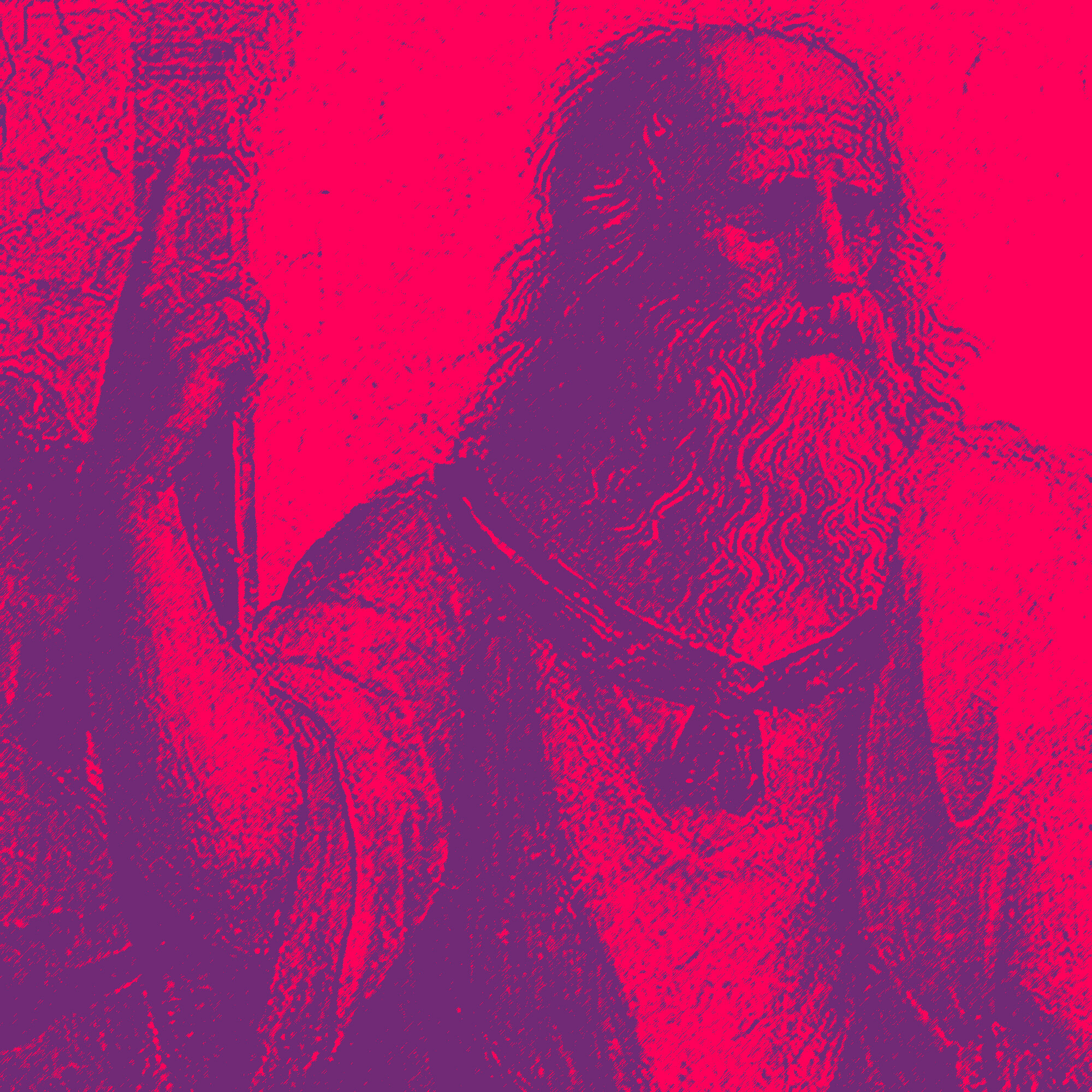
“Reality is created by the mind, we can change our reality by changing our mind.”
— Plato
PLATO
428 - 348

Hermes Trismegistus (Ancient Greek: Ἑρμῆς ὁ Τρισμέγιστος, "thrice-greatest Hermes"; Latin: Mercurius ter Maximus) is the purported author of the Hermetic Corpus, a series of sacred texts that are the basis of Hermeticism.
Hermes Trismegistus may be associated with the Greek god Hermes and the Egyptian god Thoth.[1] Greeks in the Ptolemaic Kingdom of Egypt recognized the equivalence of Hermes and Thoth through the interpretatio graeca.[2] Consequently, the two gods were worshiped as one, in what had been the Temple of Thoth in Khemenu, which was known in the Hellenistic period as Hermopolis.[3]
Hermes, the Greek god of interpretive communication, was combined with Thoth, the Egyptian god of wisdom. The Egyptian priest and polymath Imhotep had been deified long after his death and therefore assimilated to Thoth in the classical and Hellenistic periods.[4] The renowned scribe Amenhotep and a wise man named Teôs were coequal deities of wisdom, science, and medicine; and, thus, they were placed alongside Imhotep in shrines dedicated to Thoth–Hermes during the Ptolemaic Kingdom.[5]
A Mycenaean Greek reference to a deity or semi-deity called ti-ri-se-ro-e (Linear B: 𐀴𐀪𐀮𐀫𐀁; Tris Hḗrōs, "thrice or triple hero")[6] was found on two Linear B clay tablets at Pylos[7] and could be connected to the later epithet "thrice great", Trismegistos, applied to Hermes/Thoth. On the aforementioned PY Tn 316 tablet—as well as other Linear B tablets found in Pylos, Knossos, and Thebes—there appears the name of the deity "Hermes" as e-ma-ha (Linear B: 𐀁𐀔𐁀), but not in any apparent connection with the "Trisheros". This interpretation of poorly understood Mycenaean material is disputed, since Hermes Trismegistus is not referenced in any of the copious sources before he emerges in Hellenistic Egypt.
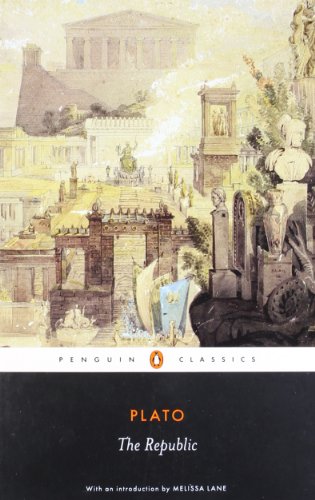



“If uncertainty is unacceptable to you, it turns into fear. If it is perfectly acceptable, it turns into increased aliveness, alertness, and creativity.”
— Eckhart Tolle
A New Earth
ECKHART TOLLE
1948

Hermes Trismegistus (Ancient Greek: Ἑρμῆς ὁ Τρισμέγιστος, "thrice-greatest Hermes"; Latin: Mercurius ter Maximus) is the purported author of the Hermetic Corpus, a series of sacred texts that are the basis of Hermeticism.
Hermes Trismegistus may be associated with the Greek god Hermes and the Egyptian god Thoth.[1] Greeks in the Ptolemaic Kingdom of Egypt recognized the equivalence of Hermes and Thoth through the interpretatio graeca.[2] Consequently, the two gods were worshiped as one, in what had been the Temple of Thoth in Khemenu, which was known in the Hellenistic period as Hermopolis.[3]
Hermes, the Greek god of interpretive communication, was combined with Thoth, the Egyptian god of wisdom. The Egyptian priest and polymath Imhotep had been deified long after his death and therefore assimilated to Thoth in the classical and Hellenistic periods.[4] The renowned scribe Amenhotep and a wise man named Teôs were coequal deities of wisdom, science, and medicine; and, thus, they were placed alongside Imhotep in shrines dedicated to Thoth–Hermes during the Ptolemaic Kingdom.[5]
A Mycenaean Greek reference to a deity or semi-deity called ti-ri-se-ro-e (Linear B: 𐀴𐀪𐀮𐀫𐀁; Tris Hḗrōs, "thrice or triple hero")[6] was found on two Linear B clay tablets at Pylos[7] and could be connected to the later epithet "thrice great", Trismegistos, applied to Hermes/Thoth. On the aforementioned PY Tn 316 tablet—as well as other Linear B tablets found in Pylos, Knossos, and Thebes—there appears the name of the deity "Hermes" as e-ma-ha (Linear B: 𐀁𐀔𐁀), but not in any apparent connection with the "Trisheros". This interpretation of poorly understood Mycenaean material is disputed, since Hermes Trismegistus is not referenced in any of the copious sources before he emerges in Hellenistic Egypt.




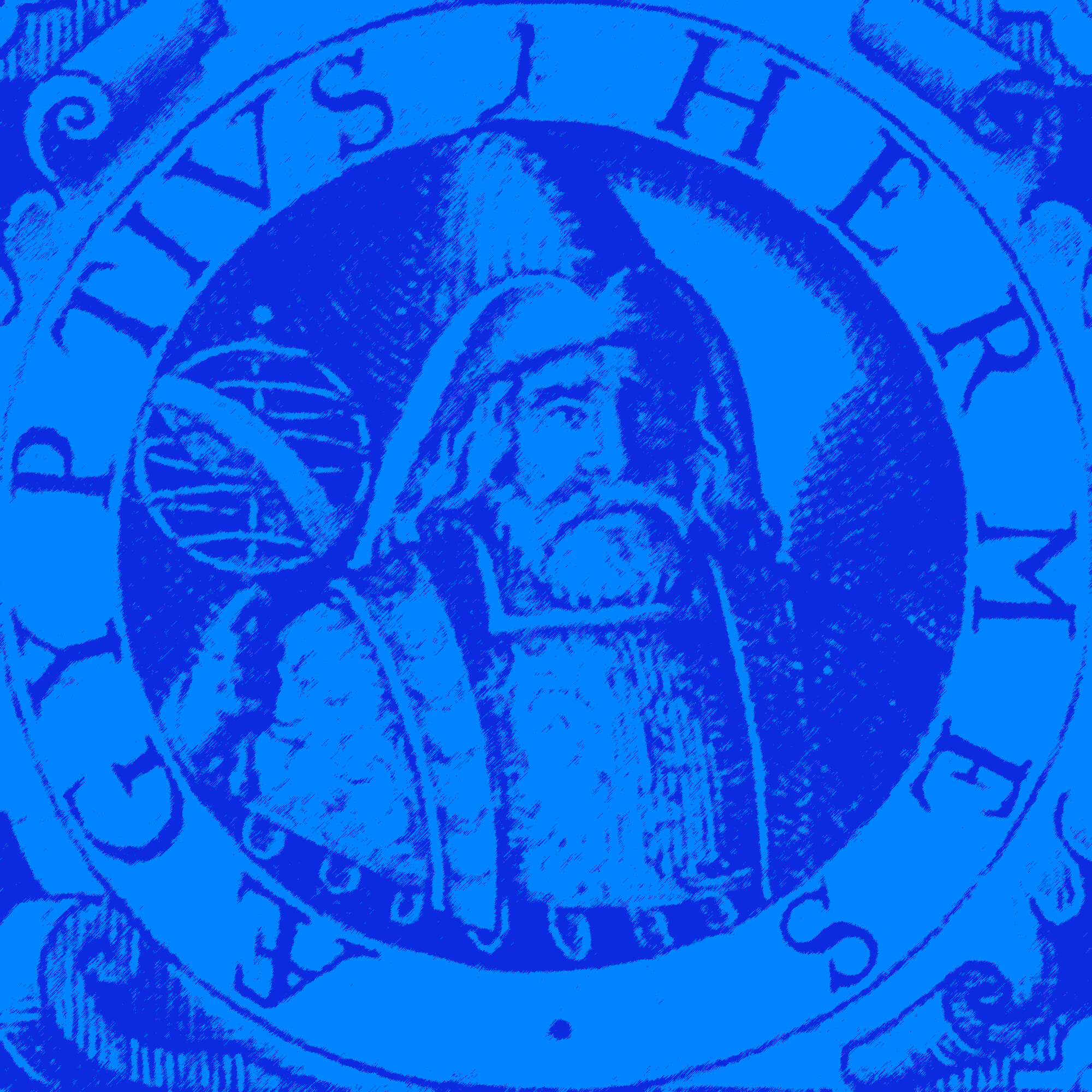
“Philosophy is nothing else than striving through constant contemplation and saintly piety to attain knowledge of God.”
― Hermes Trismegistus
HERMES TRISMEGISTUS
A Curated Selection Of Enlightened Works
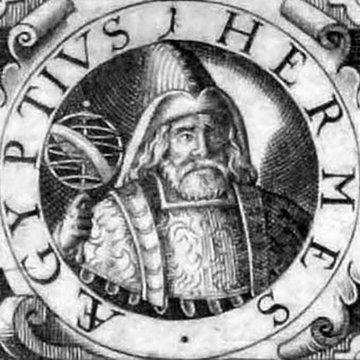
Hermes Trismegistus (Ancient Greek: Ἑρμῆς ὁ Τρισμέγιστος, "thrice-greatest Hermes"; Latin: Mercurius ter Maximus) is the purported author of the Hermetic Corpus, a series of sacred texts that are the basis of Hermeticism.
Hermes Trismegistus may be associated with the Greek god Hermes and the Egyptian god Thoth.[1] Greeks in the Ptolemaic Kingdom of Egypt recognized the equivalence of Hermes and Thoth through the interpretatio graeca.[2] Consequently, the two gods were worshiped as one, in what had been the Temple of Thoth in Khemenu, which was known in the Hellenistic period as Hermopolis.[3]
Hermes, the Greek god of interpretive communication, was combined with Thoth, the Egyptian god of wisdom. The Egyptian priest and polymath Imhotep had been deified long after his death and therefore assimilated to Thoth in the classical and Hellenistic periods.[4] The renowned scribe Amenhotep and a wise man named Teôs were coequal deities of wisdom, science, and medicine; and, thus, they were placed alongside Imhotep in shrines dedicated to Thoth–Hermes during the Ptolemaic Kingdom.[5]
A Mycenaean Greek reference to a deity or semi-deity called ti-ri-se-ro-e (Linear B: 𐀴𐀪𐀮𐀫𐀁; Tris Hḗrōs, "thrice or triple hero")[6] was found on two Linear B clay tablets at Pylos[7] and could be connected to the later epithet "thrice great", Trismegistos, applied to Hermes/Thoth. On the aforementioned PY Tn 316 tablet—as well as other Linear B tablets found in Pylos, Knossos, and Thebes—there appears the name of the deity "Hermes" as e-ma-ha (Linear B: 𐀁𐀔𐁀), but not in any apparent connection with the "Trisheros". This interpretation of poorly understood Mycenaean material is disputed, since Hermes Trismegistus is not referenced in any of the copious sources before he emerges in Hellenistic Egypt.


